
Researchers are encouraging the public to try plastic free alternatives to help combat pollution in our rivers and oceans
We do a lot of public engagement work to help people make better choices and understand what can and can’t be recycled, because it’s not always clear
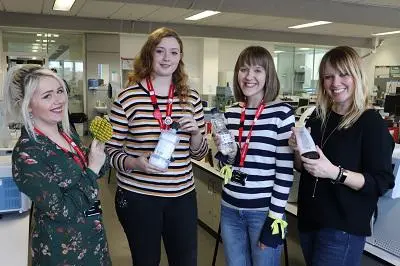
In a series of videos, experts from Staffordshire University's Microplastics Research Group highlight the benefits of sustainable products like beeswax food wrappings, refillable water bottles and solid shampoo.
Claire Gwinnett, Associate Professor of Forensic and Crime Science, specialises in microfibre analysis and set up the group.
“We do a lot of public engagement work to help people make better choices and understand what can and can’t be recycled, because it’s not always clear.” Claire explained.
“We also do work around influencing industry - the companies creating things like plastic packaging - and try to get them to think about alternatives.”
Claire was part of the research team that first discovered evidence of deep-sea animals ingesting microplastics. Claire’s pioneering work takes her across the globe and she is currently on a research trip investigating microplastic analysis in Australia.
PhD researchers Amy Osbourne, Heather Bennett and Ellie Harrison also feature in the short films alongside Claire.
Heather and Claire set up the Mac2Mic research project which explores plastic degradation in freshwater systems, and they recently received a Alan Tetlow Memorial Bursary through the Water Science Forum which will fund a trip to specialist research facilities in Saint Louis, USA.
Ellie’s PhD research looks at microplastic pollution and pesticides in agricultural landscapes and last week she presented her undergraduate work at the Houses of Parliament.
Claire said: “Our research looks at plastic degradation and the science behind the analysis of these plastics after they break down. We hope to apply some of that research to find alternatives to the plastic packaging that we see in our shops.”
In June, Staffordshire University will host Big Bang West Midlands which invites schoolchildren from across the Midlands to learn about all things STEAM - science, technology, engineering, arts and maths.
This year’s Big Bang competition ‘Going Underwater with STEAM’ challenges school pupils to come up with solutions to the problem of underwater pollution.
Claire added: “It’s so important to educate young people about the problems with plastic and encourage them to think about alternatives because they are the future. Hopefully our work and these videos will help to inspire them!”
Watch all the videos on Staffordshire University’s YouTube channel here.