
Citizen scientists have the chance to join world-renowned microplastic experts on an expedition off the Atlantic coast
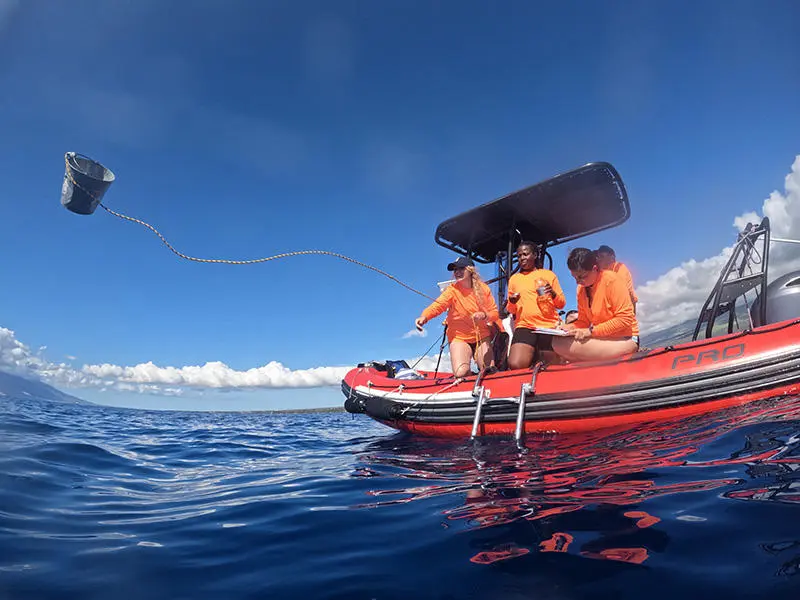
This is a unique opportunity to help towards a global project and learn about the methods that we have developed at University of Staffordshire to sample and study microplastics.
Citizen scientists have the chance to join world-renowned microplastic experts on an expedition off the Atlantic coast.
University of Staffordshire’s Professor Claire Gwinnett and colleagues have joined forces with Basking Shark Scotland to conduct four expeditions this September – and members of the public can sign up to take part.
Lasting four days, each trip will leave from Inverness in Scotland and focus on monitoring microplastic pollution in feeding sites of endangered basking sharks.
Forensic fibre specialist Gwinnett has helped to pioneer an approach dubbed "CSI for the Ocean". Bringing methods used in forensic science into marine science, she has helped to map microplastic pollution around the globe, including in the Hudson River in New York and the waters around Hawaii.
“This is a unique opportunity to help towards a global project and learn about the methods that we have developed at University of Staffordshire to sample and study microplastics,” explained the Professor in Forensic and Environmental Science.
“No previous experience is necessary and those who join us will be the first members of the public to try out a new app that we have created with National Geographic, which uses AI to analyse and categorise the plastic samples that we collect!”
Members of the expeditions will study the basking shark population, recording their location, size, sex and behaviour. Crew members will also analyse zooplankton samples for microplastics to assess the risk to the sharks.
Shane Wasik, from Basking Shark Scotland, said: “There has been a late summer aggregation of basking sharks around the upper Moray Firth for a few years. Our aim is to start gathering data on this group of basking sharks along with conducting some groundbreaking new experiments on microplastics.
“No marine biology experience is necessary, just a willingness to get involved in experiments and running of the expedition is ideal.”
Gwinnett added: “Monitoring microplastics is important for a variety of reasons. In this case, basking sharks are filter feeders and we need to understand whether they are ingesting plastics from the water and how that might affect their health and behaviours.
“Our methods are simple and designed to be easily accessible, allowing more people to get involved and contribute valuable data. This will provide a clearer picture of microplastic pollution levels and how we can combat them. We’re excited for people to join us!”
Four expeditions will take place between 2 Sept - 17 Sept 2025, with places costing £790.00. Find more information and booking details here.
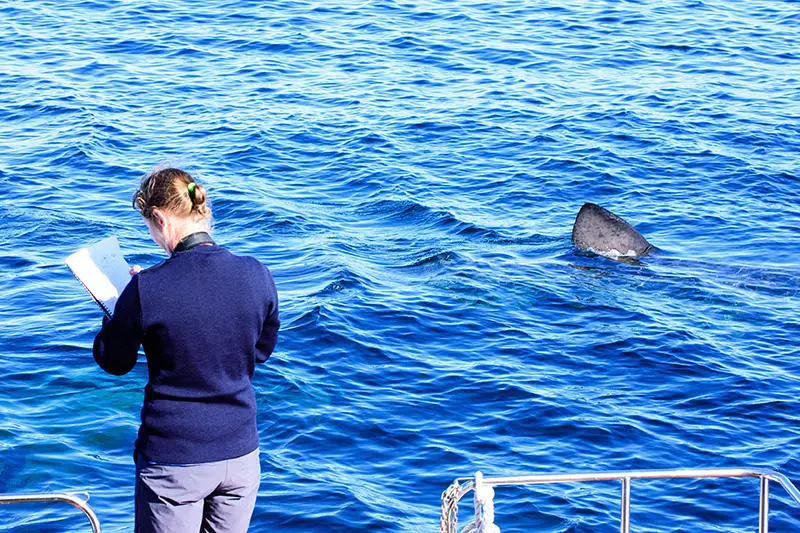
The expeditions will monitor basking sharks