
The public are invited to learn about pioneering research which has helped uncover mass Holocaust killings in a free lecture next week.
I developed a unique non-invasive methodology which can help create a very detailed and accurate picture of the crimes that were perpetrated.
For over a decade Dr Caroline Sturdy Colls, Professor of Conflict Archaeology, has investigated historic crimes, such as the Holocaust, using forensic archaeology to shed new light on what happened.
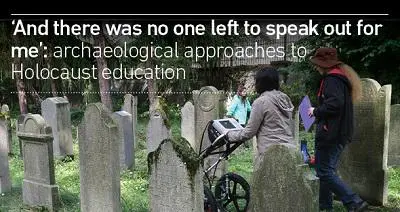
Kicking off Staffordshire University’s ‘Profs in the Pav: Global Impact Series’ her talk And there was no one left to speak out for me’: archaeological approaches to Holocaust takes place at 5.30pm on Monday 3 February.
The presentation will explore how these archaeological investigations can help tackle racism and xenophobia in the present.
Professor Sturdy Colls is Director of Staffordshire University’s Centre of Archaeology which has pioneered Holocaust archaeology as a discipline by bringing together the expertise of technologists, social scientists, historians, and forensic archaeologists
She said: “I developed a unique non-invasive methodology which can help create a very detailed and accurate picture of the crimes that were perpetrated.
“There's really nobody else doing what we're doing at the moment. The team here is very interdisciplinary, we are very field-based and we've worked on a number of active investigations of missing persons and genocide around the world.”
The team have carried out research at more than 50 sites and have worked with a number of Holocaust survivors and the families of those who died. Notably, Professor Sturdy Colls led the first archaeological surveys of the former extermination camp at Treblinka located Poland.
Last year, the team also investigated a Nazi SS camp constructed in secrecy on the British Channel Island of Alderney, which featured in a television documentary.
This month, the Centre of Archaeology has announced a new postgraduate degree course MA Forensic Archaeology and Genocide Investigation which will provide students with the opportunity to learn directly from the team’s world leading work in the field.
Professor Sturdy Colls added: “We want to ensure that our students have the most up-to-date information about real-world scenarios as well as the opportunity to engage in those active field projects. So, that's what makes this really unique.”
Discover more about studying MA Forensic Archaeology and Genocide Investigation at Staffordshire University’s next Postgraduate Open Day on Wednesday 4 March - book your place here.
‘And there was no one left to speak out for me’: archaeological approaches to Holocaust takes place on Monday 3 February at 5:30pm, Pavilion Fusion Cafe, Staffordshire University, College Road, Stoke-on-Trent, ST4 2DE. Find further information and book your place here.