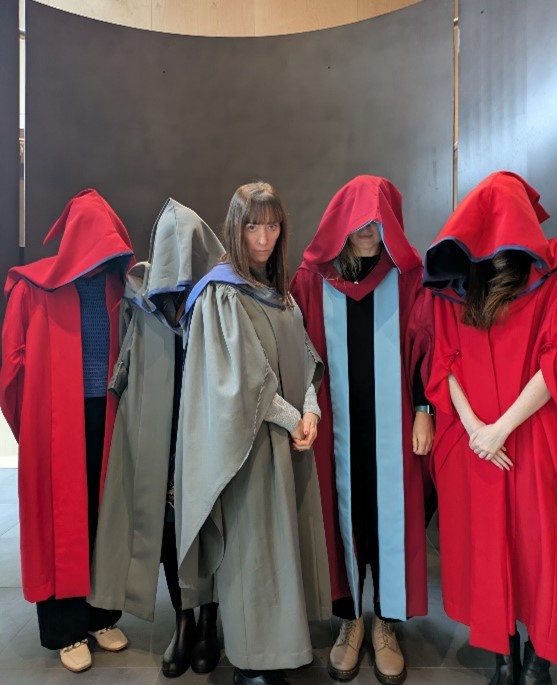
How to Win The Traitors (According to Psychology)
The Traitors has captured the imagination of the nation, with millions tuning in to watch the trials and tribulations of the hapless “faithfuls” as they attempt, often unsuccessfully, to identify the traitors among them. Watching at home, many of us are convinced we’d do better. But would we?
What viewers may not realise is that the format of The Traitors is rooted in classic psychological research. In 1986, psychologist Dimitry Davidoff developed the game Mafia to demonstrate an important social phenomenon: an informed minority can consistently outmanoeuvre an uninformed majority. His work also highlighted just how poor humans are at detecting deception.
Research suggests that our ability to correctly identify when someone is lying can be as low as 54%, barely above random chance. Crucially, however, our confidence in our ability to spot a liar is far higher. This overconfidence bias helps explain why viewers at home often find themselves shouting at the television when contestants miss what feel like obvious clues.
Skilled traitors exploit this bias. They encourage faithfuls to pursue theories they know are wrong, but which the faithfuls are convinced of. Once someone believes they’ve “cracked it”, they become remarkably resistant to contradictory evidence.
One of the faithfuls’ biggest mistakes is assuming that trustworthiness looks a certain way. We tend to believe traitors will appear sneaky, cold or withdrawn. In reality, warmth, humour and openness are often far more effective disguises. Contestants who appear friendly and emotionally expressive are less likely to attract suspicion, even when they should.
Similarly, overtly selfish behaviour, such as grabbing a shield, is often taken as proof someone is a traitor. In fact, such actions may be too obvious. A successful traitor is constantly managing how they are perceived, presenting an open and honest exterior, and deflecting difficult questions with humour or charm.
Being a traitor, however, is mentally exhausting. When traitors are finally revealed, their visible relief is telling. This was most notable in the recent Celebrity Traitors when Alan Carr revealed himself as a traitor, the relief on his face is obvious and led to an emotional outpouring. Psychological research shows that lying requires a lot of our mental resources, particularly when lies are complex or inconsistent. This is particularly true considering traitors have to remain consistent for nearly 2 weeks. For this reason, the most effective traitors keep their deceptions simple and stick closely to a consistent narrative.
Finally, many of the challenges faced by traitors involve moral and strategic dilemmas. While sabotaging the group may offer short-term gains, it also risks drawing attention. In most cases, avoiding suspicion is far more valuable than any immediate advantage. Survival, above all else, is the goal.
In short, the best traitors are those who appear open and trustworthy, limit their deceptions, and skilfully turn faithfuls against one another at the round table.
So - do you think you have what it takes to win The Traitors?
Interested in how psychology explains real-world behaviour like this? Explore our Psychology courses at University of Staffordshire and discover how research turns into real insight.