
An international team of forensic archaeologists, historians, chemists and filmmakers have been given exclusive access to explore a key WW1 site
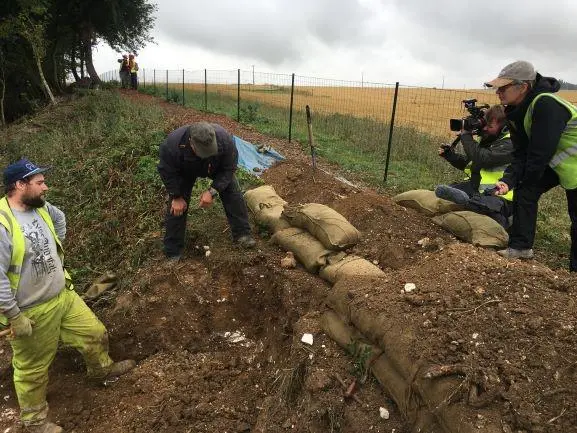
It is the first time that anyone has been granted access to uncover the secrets of this time capsule which has laid dormant for over 100 years
The team have been carrying out research at Hawthorn Crater, near Beaumont Hamel in France. It is one of 17 mines blown up by British troops on the morning of 1 July 1916 to signal the start of the Battle of the Somme offensive.
The site has never been scientifically examined before and is now being uncovered through a series of collaborative work by the Hawthorn Ridge Crater Association along with partners Staffordshire University, French communities and British partners.
Fiona Graham, Associate Professor and Radio and Television Producer, explained: "It is the first time that anyone has been granted access to uncover the secrets of this time capsule which has laid dormant for over 100 years.
“The first day of the Battle of the Somme is undoubtedly one of the most infamous days in British military history. Now due to unprecedented unique access granted by France, we are uncovering new information never seen before.”
The Erasmus funded research project is being captured on film for posterity using narrative and digital film archive methods including examining topography of the battlefield and Hawthorn Crater from drone examinations.
Fiona said: “The new evidence, images and personal stories discovered are creating a picture of what happened in more detail about both the first and last days of the Battle of the Somme. The research has revealed how Hawthorn Ridge was used by the German front line as a means of defence and that there is actually not just one crater.”
As many people cannot travel to France for commemorations this year due to COVID-19, the team have released a new podcast to mark the anniversary of the Battle of The Somme on Wednesday 1 July.
In conversation on location in France, Fiona introduces us to her friend and First World War tunnelling expert Colin Winn as they take us on a journey around the World War One iconic crater and explain the work they are doing together today from the sights on, around and inside this massive hole in the ground with a circumference of over half a mile.
Colin is a retired weapons engineer for the Royal Ordnance and BAE Systems and his grandfather was killed near Arras in 1917, he’s worked on the BBC documentary “Secret Tunnel Wars of The Somme” with historian Peter Barton and made short films and podcasts in America.
Listeners can join them on a tour on foot on a sunny but sometimes windy day as they explain what is happening on the battlefields of Northern France today. Listen to the podcast here.