
Researchers from the Centre of Archaeology are to work with the Srebrenica Memorial Center to shed new light on the genocide that occurred there.
“At the Centre of Archaeology, we look forward to building on our collaborative work with the Srebrenica Memorial Center; we must continue to tell the stories of the victims, fight for justice, find the the evidence connected to these terrible crimes and educate people around the world about where discrimination can lead."
In just five days in July 1995, more than 8,372 men and boys – all Bosniak Muslims – were murdered in Srebrenica and buried in mass graves by Bosnian Serb soldiers. Tens of thousands of men, women and children in Bosnia and Herzegovina also suffered beatings, torture, sexual violence and starvation in the years leading up to the genocide.
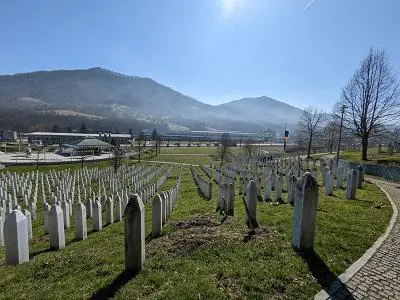
Opened in October 2000, The Srebrenica Memorial Center is a place of remembrance and education, and is co-located with the Potočari cemetery where identified victims of the genocide are buried.
The Memorandum of Understanding, signed by Staffordshire University Professor Caroline Sturdy Colls and Ševket Hafizović, Chair of the Steering Board of the Srebrenica Memorial Center commits to “education, scientific research, cultural exchange, culture of remembrance and memorialization.” The signing ceremony was also attended by representatives of women’s organisations who lost husbands and sons during the genocide.
Professor Sturdy Colls, Director of the Centre of Archaeology, said: “The crimes committed in Bosnia and Herzegovina continue to affect so many people and so many of those killed remain missing persons. Genocide took place right in front of the eyes of the international community in Srebrenica and we must continue to ask ourselves how this was allowed to happen and what can we do to prevent such crimes from happening in the future.
“At the Centre of Archaeology, we look forward to building on our collaborative work with the Srebrenica Memorial Center; we must continue to tell the stories of the victims, fight for justice, find the the evidence connected to these terrible crimes and educate people around the world about where discrimination can lead."
The signing took place during a trip organised by Staffordshire University, New Vic Borderlines (the award-winning outreach initiative of the New Vic Theatre), and Remembering Srebrenica as part of a new collaborative project "My Thousand Year Old Challenge". The project seeks to initiate a step change in policymaking and secure long-term commitments to education about genocide and crimes against humanity committed in Bosnia and Herzegovina, particularly with regards the genocide in Srebrenica.
Part funded by an UKRI Impact Acceleration Award Grant for Policy Impact, it involves the adaptation of the play “My Thousand Year Old Land” written by Sue Moffatt and Staffordshire University graduate Aida Salkic Haughton MBE, workshops with policymakers and the development of toolkits that can be used by educators across the UK.
Aida, Communities and Partnership Engagement Manager at New Vic Borderlines, said: “During our trip, emotions evoked by beautiful sights, rich culture and welcoming people clashed with harrowing testimonies of war survivors and the loss of life we witnessed at Potočari Memorial Centre, but it also made us more determined to join our forces in the search for peace and justice.”
The trip to Bosnia and Herzegovina was also attended by students studying on the MSc Forensic Archaeology and Genocide Investigation degree who visited many sites connected to mass violence including former concentration camps at Keraterm and Trnopolje, the Podrinje Identification Project (PIP) forensic facility in Tuzla, the Potočari cemetery and the Srebrenica Memorial Center, as well as the Museum of Genocide and the Tunnel Museum in Sarajevo.
Postgraduate student Emma Delis said: "This trip to Bosnia and Herzegovina was incredibly transformative, offering unforgettable experiences for Staffordshire University students and instilling a message of unity against hatred. It was a wonderful opportunity to forge new relationships with inspiring people and offered a remarkable insight into Bosnian culture."