
Researchers are calling on the public to help map microplastic pollution around the world using a new mobile phone app
You don’t need specialist equipment or a laboratory. This is science that anyone can do – even in the remotest locations – with just a phone and a simple sampling kit.
Developed by University of Staffordshire, the CSI for the Ocean app enables anyone, anywhere to collect and upload samples from water or even the air to be analysed for microplastics.
With support from the Lindblad Expeditions-National Geographic Fund, it has been pioneered by world leading forensic fibre specialist Professor Claire Gwinnett in collaboration with marine conservationist and Rozalia Project(opens in new tab) founder Rachael Miller.
Their CSI for the Ocean research approach applies forensic science principles, traditionally used in crime scene investigations, to environmental monitoring.
Gwinnett and Miller have developed and trialled a sampling method over several years on research expeditions, including along the Hudson River in New York, around the Hawaiian Islands, and in the North Sea.
Using simple, low-cost equipment – including a bottle or bucket, a clip-on mobile phone lens, glass slides, and the University of Staffordshire’s patented Easylift® tape – users of the app can collect samples from rivers, lakes, oceans, or even household tap water.
Images of the samples are then uploaded to the app, which uses artificial intelligence and machine learning to identify and log any microplastics present within a global database.
It also incorporates community-driven features, allowing users to form groups, contribute to shared projects, and engage through interactive elements such as leaderboards – helping to build a global network of citizen scientists.
“You don’t need specialist equipment or a laboratory. This is science that anyone can do – even in the remotest locations – with just a phone and a simple sampling kit,” explained Gwinnett, Professor of Forensic and Environmental Science at University of Staffordshire.
“Research isn’t just for big institutions. By opening up data collection to the public, we can build a far more comprehensive picture of where microplastic pollution exists, how it changes over time and how to better target interventions.”
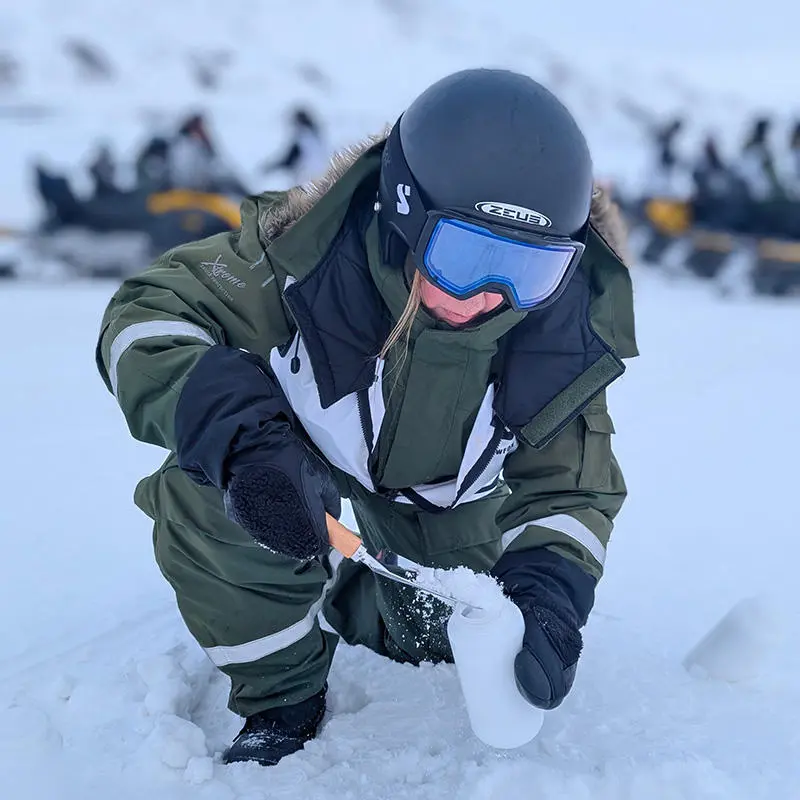
To demonstrate this principle, Professor Gwinnett recently travelled to one of the most remote locations on the planet – the Svalbard archipelago, between Norway and the North Pole. During a week-long trip, she collected samples from snow and uploaded them to the app to be analysed.
“Even in the most pristine locations on Earth, microplastics are present,” Gwinnett said. “Because of the size range of these microfibres, they become airborne and can travel ultra long distances to remote regions like this. The microplastics found in these samples have come from all over the world. This is why we need to engage people globally to contribute to our microplastics database.
“This part of the study has demonstrated that even really remote locations can be easily sampled and knowledge of microplastics increased. Although accessing these regions can be challenging, the sampling method, ability to filter and secure samples and also image them just using your phone, is quick and easy. This means that travel specialists, tour companies and eco-travel companies could include these methods for gathering data about microplastics in their tours and engage the public with their environment in a new way.”
The app will be officially launched at a free public event(opens in new tab) showcasing the CSI for the Ocean project at University of Staffordshire on Wednesday 6 May 2026. The event will bring together researchers, students, environmental organisations, charities, policymakers and the public to explore the science behind the project and its potential impact.
Attendees will hear from leading experts, take part in a live sampling session at the nearby River Trent, and gain hands-on experience of the techniques underpinning the research. The day will also feature interactive exhibits and sustainability-focused activities, including a community Fashion Swap.
Professor Gwinnett said: “This is a free event open to anybody who has an interest in plastic pollution to learn about our research and how they can get involved in tackling global plastic pollution.”
Rachael Miller from the Rozalia Project, who is supporting the event, added: “The public is central to this project. We need large-scale, high-quality data to understand microplastic pollution – and that can only be achieved by engaging people everywhere. This initiative empowers individuals to contribute to real scientific research and be part of the solution.”
CSI for the Ocean – event details
Date: Wednesday 6 May 2026
Location: The Catalyst Building, University of Staffordshire, Leek Road, Stoke-on-Trent, Staffordshire, ST4 2DF
Event Time: 10am – 4pm (followed by the Fashion Swap at 4 – 6pm)
Cost: Free to attend
Book your place: https://www.eventbrite.co.uk/e/csi-for-the-ocean-tickets-1983072675756(opens in new tab)