
Students, staff, police colleagues, and industry partners have come together to mark 25 years of forensics at University of Staffordshire
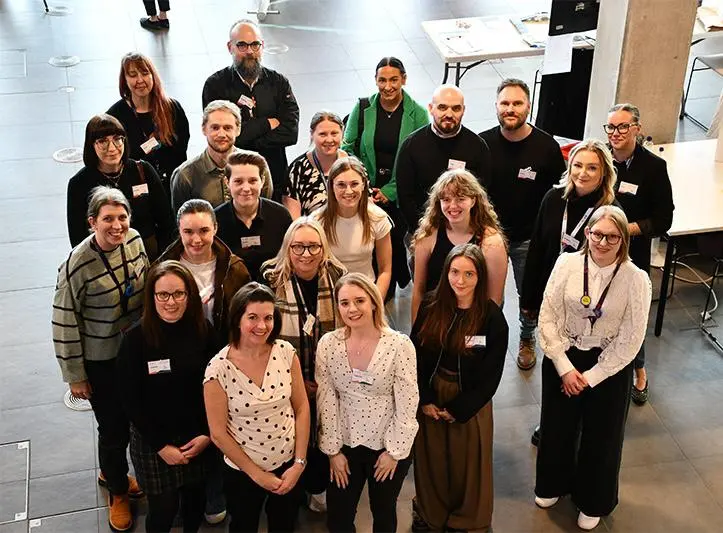
We are proud to be one of the pioneers of forensic education in the UK, helping to train a generation of professionals who now play a vital role across policing, forensic science and allied sectors.
For a quarter of a century, the University has been at the forefront of forensic science education, delivering high-quality teaching and shaping the next generation of forensic professionals.
This milestone coincides with the ten-year anniversary of the Staffordshire Forensic Partnership (SFP) – a collaboration between the University, Staffordshire Police and the Office of the Police and Crime Commissioner, nationally recognised as an example of best practice.
Pro Vice-Chancellor Professor Raheel Nawaz said: “We are proud to be one of the pioneers of forensic education in the UK, helping to train a generation of professionals who now play a vital role across policing, forensic science and allied sectors.
“Preparing students for the future is at the heart of what we do – through innovation, employability and real-world learning. Key to this is our collaboration with industry, providing students with hands-on work experience and driving research with real impact.
“The Staffordshire Forensics Partnership is a fantastic example of this, and we look forward to continuing to work together to shape the next chapter of this journey.”
The University launched its first undergraduate forensics degree in 2000 with an initial cohort of 17 students.
Today, it has two BSc awards, Forensic Science and Forensic Investigation, each having the option of integrated placement years, alongside two standalone Masters degrees: Forensic Science, and Digital Forensic Investigation.
Across all these courses over the last 25 years, more than 2,000 students have graduated and there have been over 20 PhD students who have defended their theses.
A special celebratory event was held on campus to reflect on these successes, featuring panel discussions with industry experts, researchers, and alumni who were invited to share their experiences and tell the audience about their varied career destinations.
Highlights included a keynote address from Amanda-Jane Balfour, the Home Office’s first Director of Forensic Services, as well as speeches from Assistant Chief Constable Sally Blaiklock of Staffordshire Police and Alex Murray OBE, Director of Threat Leadership at the National Crime Agency.
Professor Claire Gwinnett, who leads the Centre for Crime, Justice and Security, showcased the University’s internationally renowned research, from advancing crime scene investigation techniques to applying forensic methods to environmental challenges such as microplastic pollution.
The day also reflected on the Staffordshire Forensic Partnership (SPF), which started as a simple idea to bridge the gap between policing and academia and has become nationally recognised for driving meaningful change across the sector.
It was founded by John Beckwith, former Head of Forensic Services at Staffordshire Police, and Professor Andrew Jackson, former Academic Group Leader for Forensic and Crime Sciences at University of Staffordshire.
At the celebration event, the pair received a special award to mark their inspiration and strategic vision in creating the partnership, which was presented by His Honour Judge Paul Glenn, Deputy Lieutenant of Staffordshire.
Over the past decade, the SPF has facilitated nearly 100 student placements and projects between Staffordshire Police and University of Staffordshire. Alongside initiatives such as Forensic Volunteers, this provides practical, hands-on experience that helps students stand out in an increasingly competitive job market.
Through Visiting Professor roles and joint research, the partnership also ensures that knowledge flows both ways – policing benefits from academic expertise, while teaching and research are strengthened by real-world insight.
Temporary Assistant Chief Constable Sally Blaiklok from Staffordshire Police said: "Our Staffordshire Forensic Partnership has continued to flourish over the past decade. Through the right projects and support, our committed and enthusiastic workforce of students have delivered work that has made a tangible impact on policing.
“Our placements showcase Staffordshire Police as an employer of choice in forensics, with many former placement students now working within our force or others. The knowledge exchange between our organisations is invaluable. We’ve seen fantastic examples of collaboration which benefit both police staff and students alike. Together, we’ve achieved so much, and we will continue to lead the way in forensic science and policing."